Marine salvage
Raising sunken vessels, equipment and structures, underwater search for objects, clearing the seabed of wreckage and man-made debris.
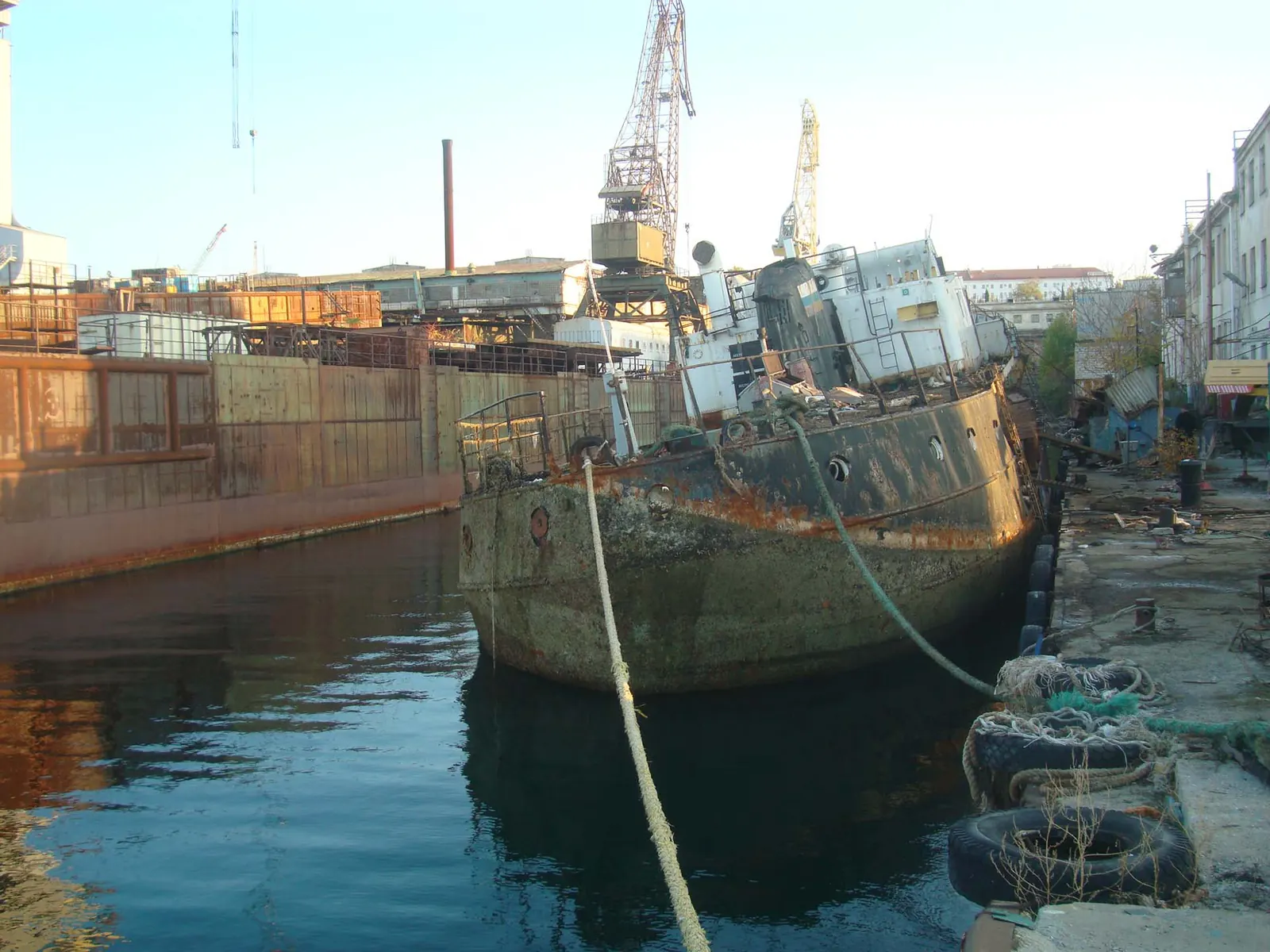
Marine salvage starts with a survey: divers find the object, see how it lies and what holds it on the bottom. Then we choose the way to raise it by weight, depth and soil, and what will not come up whole we cut into parts underwater.
Raising sunken vessels
We raise vessels, equipment and structures. Often the methods are combined: pontoons give buoyancy, a crane or a winch guides the object.
- Blowing and pumping water out of compartments.
- Additional buoyancy: rigid and soft pontoons, lift bags.
- Pulling gear: cranes, winches, tackle blocks.
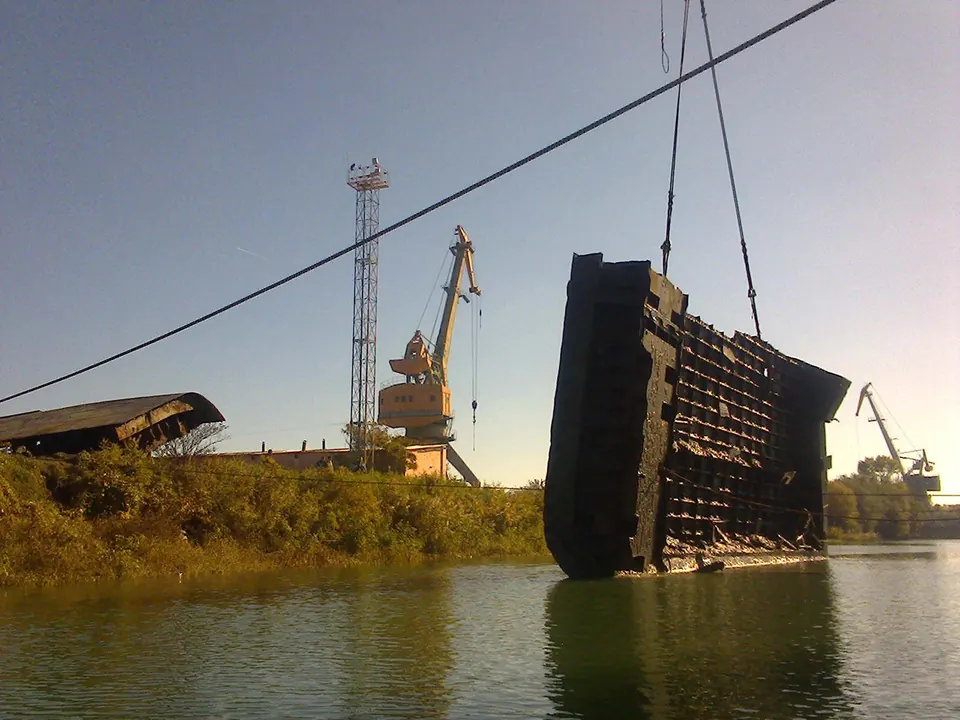
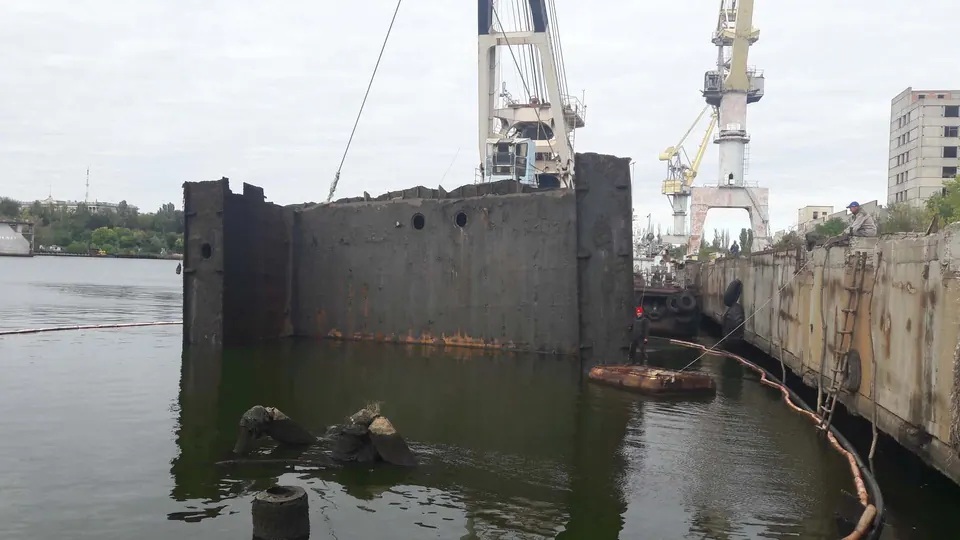
- Separating parts of sunken vessels, slinging and lifting them.
Underwater search
An underwater search comes before a lift, and on its own when cargo, an anchor or equipment is lost on the bottom.
- Surveying the water area for foreign objects.
- Searching for objects underwater, with photos and video of the finds.
- Positioning the finds and the wreckage on a chart of the area.
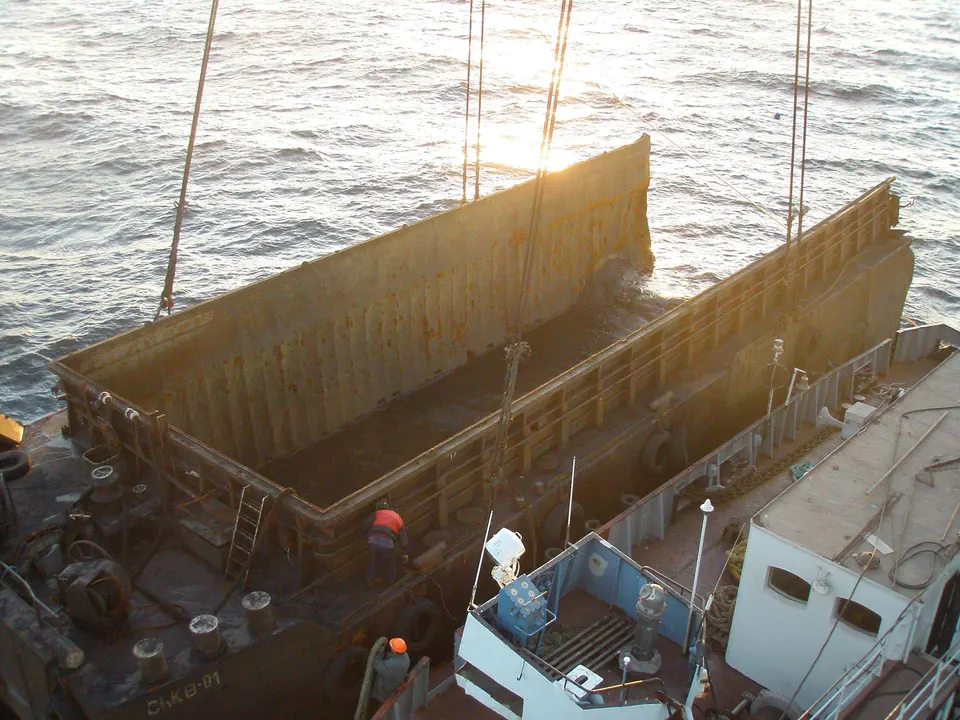
- Slinging and lifting what is found.
Cutting and clearing
When an object will not come up whole or the soil holds it, we work with underwater dismantling equipment.
- Soil removal with water jets: by ejector at depths to 10 m, by AirLift at 10 m and deeper.
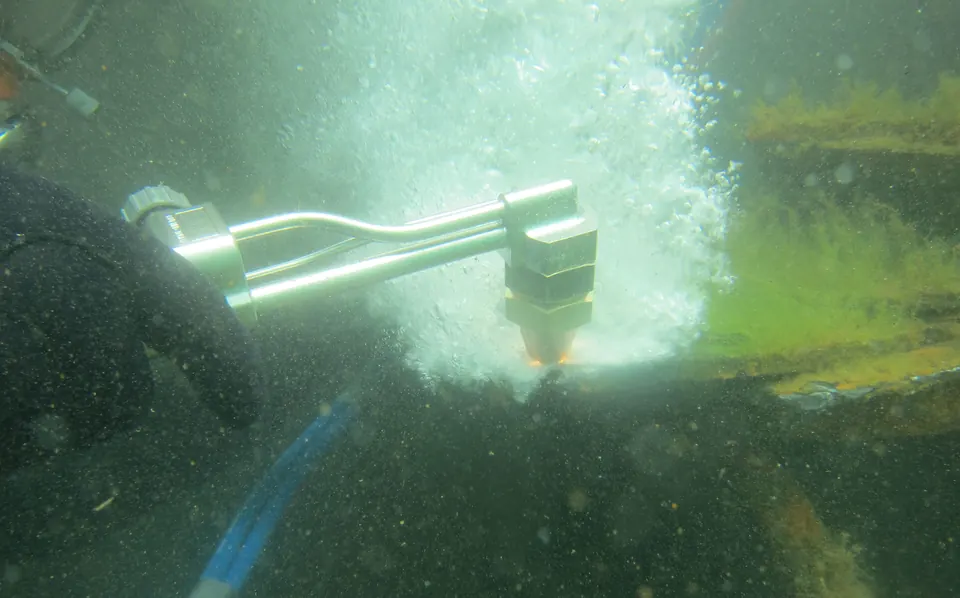
- Abrasive cutting with an 80 kW diamond wire and discs.
- Electric arc, oxy-arc, exothermic and gas cutting of metal.
- Hydraulic tools on HYKON power packs.
- Removing and towing wreckage and man-made debris.
Order diving work
Call the office or write to us in a messenger. We will ask about the job and agree the dates and the price.
Questions and answers
On salvage and underwater search
Nothing here? Write what sank, where and how deep.
Send a requestHow do you raise sunken vessels?
By blowing and pumping out water, adding buoyancy with rigid and soft pontoons and lift bags, or with pulling gear: cranes, winches, tackle blocks. The method depends on the weight of the object, the depth and how it lies.
Do you search for objects underwater?
Yes. Divers survey the area, find the objects, film and photograph them and position them on a chart. What is found we can sling and lift.
What if a vessel cannot be raised whole?
We cut it into parts underwater with an 80 kW diamond wire and underwater metal cutting, then sling and lift the parts one by one. Wreckage and debris are removed and towed away.
How deep do you work?
Soil down to 10 m we remove by ejector, deeper by AirLift. Dives below 12 m go under a certified diving physiologist, with the company's own recompression chambers rated from 1 MPa.
Services
More work on water and under water
-
Ship servicing
Cavitation hull cleaning at 200–250 bar, propeller polishing, thickness gauging, underwater hull repair.
-
Construction and repair of hydraulic structures
Diving support for sheet pile and pile installation, cathodic protection replacement, concrete repair.
-
Inspection of hydraulic structures
To classification society requirements. Photo and video records, depth soundings, charts and reports.
-
Pipelines and cable routes
Laying, spool piece and flange installation, repair clamps, underwater welding and cutting.
-
Dismantling of structures and sunken objects
Diamond wire cutting, soil removal by ejector and AirLift, lifting with pontoons.
-
Underwater welding and cutting
Welding 5–30 mm shell plating, anodes and pipeline spool pieces afloat, four methods of metal cutting.